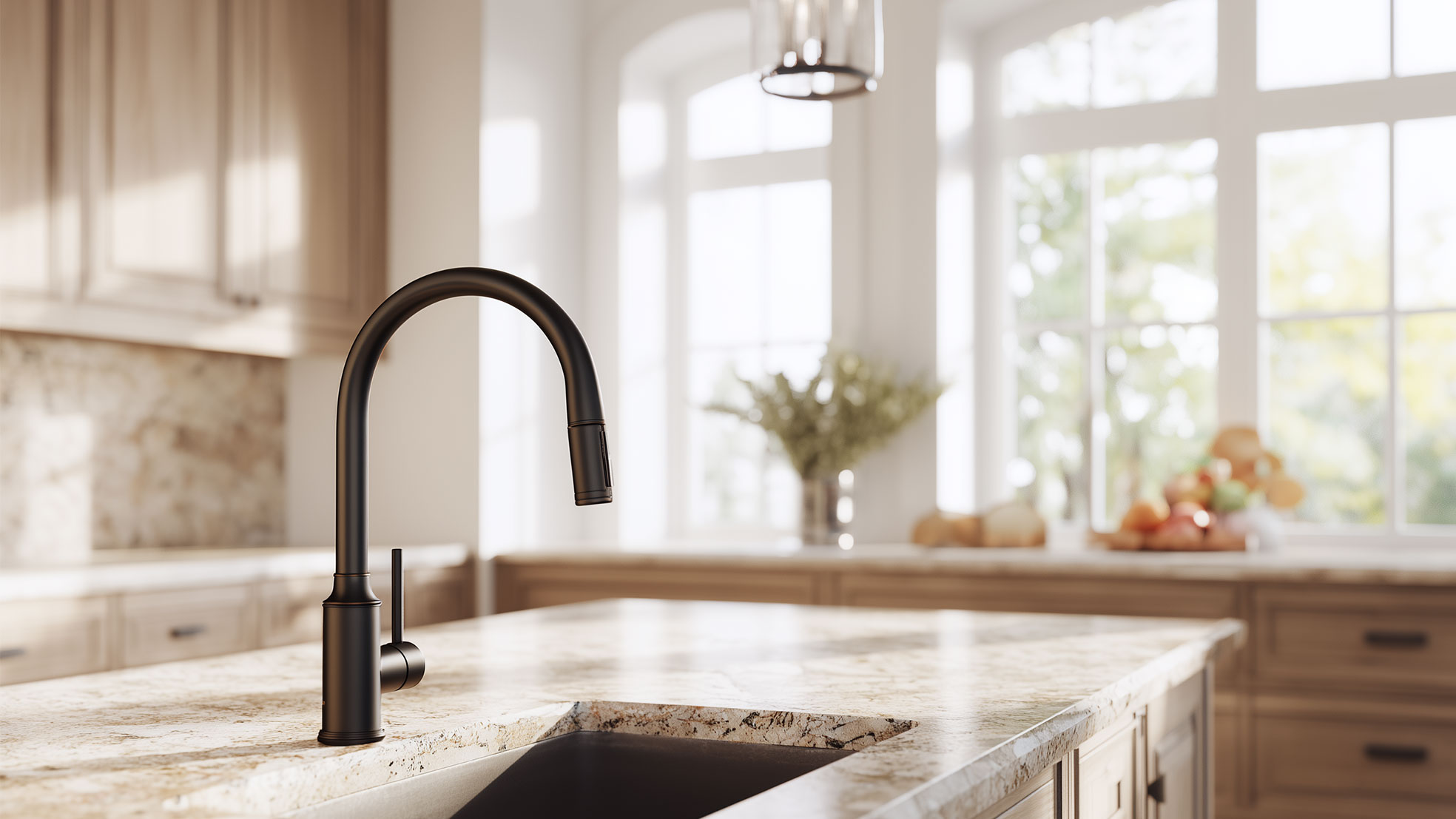
The tap, touched dozens of times daily and visible from nearly every angle, plays a surprisingly central role in establishing this understated character. Choosing the right one means understanding what Old Money style actually values and how those principles translate to fixture selection.
What Defines Old Money Aesthetics
Old Money style draws from homes where quality accumulated over generations. Nothing was purchased to impress. Everything was chosen to last and to improve with age. The aesthetic rejects trends in favour of timelessness, flash in favour of substance.
In kitchens, this translates to natural materials used honestly. Stone countertops without busy patterns. Wood cabinetry with visible grain. Hardware that feels solid in hand. Colours drawn from nature rather than fashion. The overall impression is of a space that could have existed twenty years ago and will look equally appropriate twenty years hence.
The approach isn't about spending less. Quality materials and expert craftsmanship cost substantially. But the money goes into substance rather than surface. A visitor might not immediately notice the expense. They simply feel comfortable in a space that works beautifully without demanding attention.
Why Taps Matter in This Context
The tap is the most frequently touched element in any kitchen. You interact with it while cooking, cleaning, drinking water, and washing hands. This constant contact makes it impossible to ignore functionally, even when the design goal is visual discretion.
In Old Money kitchens, the tap must satisfy competing demands. It needs presence without prominence. It must feel substantial without appearing heavy. It should suggest quality immediately upon touch while remaining visually quiet from across the room.
This balance eliminates many options. Overly ornate traditional taps look like they're trying too hard. Aggressively modern designs feel cold and temporary. The sweet spot lies in designs that reference heritage without replicating it exactly, using contemporary engineering inside forms that feel established rather than invented.
Finishes That Age Gracefully
Finish selection matters enormously in achieving Old Money character.
Brushed gold and antique brass have gained popularity precisely because they suit this aesthetic. Unlike polished brass that demands attention and shows every fingerprint, brushed finishes offer warmth without shine. They develop subtle patina over years of use, improving rather than deteriorating with age.
Matte black creates quiet drama without sparkle. Against natural stone or wood, black taps recede visually while adding definition. The finish hides water spots and fingerprints, maintaining its composed appearance through daily use.
Brushed nickel and stainless steel offer neutral sophistication that coordinates without competing. These finishes work with virtually any material palette and carry no strong stylistic associations that might date the kitchen.
Polished chrome, while perfectly functional, often reads as too bright for Old Money contexts. The reflective surface demands attention in ways that conflict with the aesthetic's foundational discretion.
Modern PVD coating technology allows these finishes to maintain their character indefinitely. Unlike traditional plating that wears through over time, quality PVD finishes resist scratching, tarnishing, and chemical damage. The tap you install today looks the same in fifteen years.
Form and Proportion
Beyond finish, the tap's physical form must suit the understated approach.
Gooseneck and arched spouts offer graceful curves that reference traditional design without copying specific historical periods. The elevated arc provides practical clearance for filling tall pots while creating visual interest through shape rather than ornament.
Bridge taps with separate hot and cold handles connect to design traditions stretching back generations. The form suggests permanence and considered choice. However, these work best in kitchens fully committed to traditional aesthetics.
Single-lever designs in restrained forms suit transitional kitchens that blend periods. The key is proportion. Oversized or exaggerated forms read as trendy. Balanced, moderate proportions feel established.
Avoid designs with excessive angles, unusual geometric shapes, or features that call attention to themselves. The tap should feel inevitable rather than selected, as if it simply belongs in that position without alternative.
Material Quality
Old Money style values what you feel as much as what you see.
Solid brass construction provides weight and resonance that immediately communicates quality. When you operate a tap made from solid brass, the movement feels precise and substantial. Hollow or lightweight construction cannot replicate this experience regardless of external appearance.
Quality ceramic cartridges ensure smooth operation for years without degradation. The handle moves with consistent resistance, neither too loose nor too stiff. This mechanical quality reinforces the impression of thoughtful investment.
The aerator, though invisible during normal use, affects water delivery noticeably. Quality aerators produce smooth, even flow without sputtering or uneven spray. The water itself becomes part of the quality experience.
These internal qualities don't photograph. They don't appear in showrooms or online listings with the same impact as finish and form. But in daily use, they constitute the difference between a tap that feels luxurious and one that merely looks it.
Coordination Without Matching
Old Money kitchens rarely feature perfectly matched elements. The aesthetic suggests accumulation over time rather than single-purchase installation. This means taps need not match cabinet hardware exactly, nor coordinate precisely with light fixtures or sink accessories.
Instead, aim for family relationships. A brushed gold tap works alongside antique brass cabinet pulls because both belong to the warm metal family without being identical. A matte black tap coordinates with oil-rubbed bronze fixtures through shared depth and warmth despite different base colours.
This approach requires confidence. Perfectly matched elements feel safer but also feel designed rather than lived. The slight variations between related but not identical finishes suggest a home where quality accumulated thoughtfully across years rather than arriving on a single delivery truck.
Practical Features in Refined Forms
Modern functionality need not compromise traditional aesthetics.
Pull-out spray heads now appear in designs that maintain classical proportions. The spray head retracts into a spout that looks entirely traditional, revealing its contemporary capability only when needed.
Swivel spouts provide practical utility while preserving clean form. The movement feels natural, and the arc covers the entire sink without mechanical complexity visible from outside.
High arched spouts accommodate large pots and tall vases that lower spouts cannot manage. This practical advantage justifies the elevated form regardless of aesthetic preference.
The goal is features that serve daily use without announcing themselves. The kitchen should work beautifully and reveal its thoughtful design through experience rather than inspection.
Installation Considerations
Old Money aesthetics extend to how fixtures meet surfaces.
Clean installation without visible complexity reinforces the sense of permanence. Escutcheons and deck plates should fit precisely without gaps. Connections should disappear beneath counters completely.
Professional installation ensures these details receive proper attention. The modest additional cost prevents the small imperfections that undermine an aesthetic built entirely on accumulated details done right.
If your kitchen design commits fully to this aesthetic, everything visible should meet that standard. A perfect tap poorly installed contradicts itself.